 Azabudai Hills Tokyo
Azabudai Hills Market: What to Buy and Where to Eat It
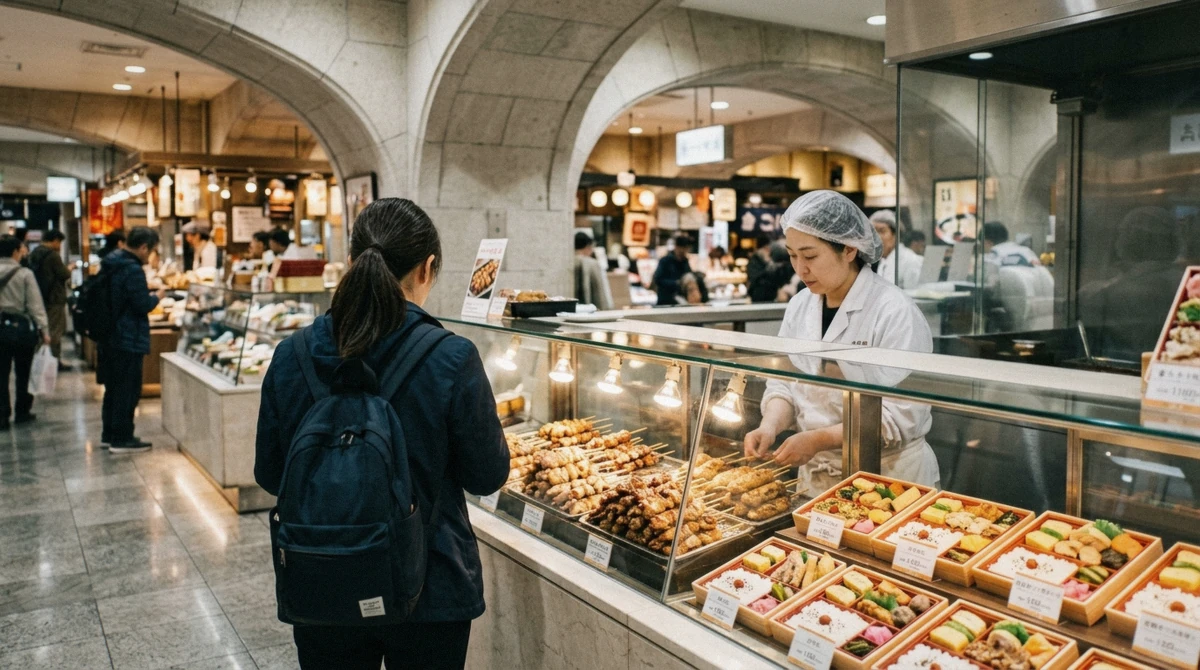
Azabudai Hills Market is not a food hall built for tourists. It is 34 specialist food shops spread across roughly 4,000 square metres of the basement and part of level 1 of Garden Plaza C, and most of the names trading there had never sold to the public before opening day. A butcher that has supplied restaurant kitchens for a century, a yakitori wholesaler founded in 1907, a fishmonger that still stocks a Michelin-starred sushi counter down the corridor: the market's entire premise is that Mori's developers persuaded these wholesalers to open a retail counter for the first time. Below is what to buy, what it costs, and how to actually eat it once you have it in hand. For the wider complex, including the museum and the observation floor, see our everything inside Azabudai Hills overview.
Quick answer
Azabudai Hills Market is a basement food market in Garden Plaza C, 34 specialist shops across about 4,000 square metres, most of them wholesalers selling directly to the public for the first time. Expect to spend ¥500 to ¥2,000 per person on a proper snack crawl: six pieces of gyoza run ¥495, a skewer of yakitori runs ¥391 to ¥591. Entry is free; only teamLab Borderless and the Sky Room inside the wider complex charge admission. Pair a market visit with the four-hour art and architecture tour if you want the museum and the food stalls in one booking.
Key takeaways
- 34 shops across about 4,000 square metres, in the basement and part of level 1 of Garden Plaza C
- The tenants are restaurant-only wholesalers selling to the public for the first time
- Kameido Gyoza: six pieces for ¥495
- Torishiki yakitori sales start at 11:30 and a queue forms fast
- Walking in costs nothing; only the museum and the Sky Room charge
What the Market Actually Is
Mori's developers Masanori Tsukamoto and Takashi Ohgaki built the market by going to wholesalers who had spent decades supplying restaurant kitchens and never once selling to a walk-in customer, and asking them to open a counter. That is the detail that separates this from an ordinary Tokyo food hall: the people behind these counters know a specific product, sometimes only one product, better than almost anyone in the city, because supplying professional kitchens was their entire business until spring 2024, when the market opened.
Kameido Gyoza is the clearest example of what that pitch meant in practice. The shop has been making gyoza since 1953, more than seven decades of the same dumpling recipe served to restaurant customers across the city, and Azabudai Hills Market is one of the few places you can now buy it directly rather than through a restaurant menu that carries it as someone else's dish.
- Hiyama, a butcher from Ningyocho trading for more than 100 years, sells Yonezawa wagyu sourced from Yamagata
- Tsukiji Toritoh, founded in 1907, supplies Tokyo's best yakitori restaurants and now sells the same birds retail
- Yamayuki and Nezu Matsumoto, two fishmongers that supply many of the city's top kitchens; Yamayuki also supplies the Michelin-starred Sushi Saito, which keeps a counter inside the market itself
None of that history is printed on a sign. It comes out only if you ask, or if you already know which stall is which, which is exactly why a straightforward list of names, dishes and prices does more good here than a description of the atmosphere.
| Stall | What to buy | Price | Hours |
|---|---|---|---|
| Kameido Gyoza | Gyoza, six pieces | ¥495 | Dine-in 11:00-20:00 (last order 19:30), takeaway from 10:00 |
| Torishiki | Chicken thigh skewer | ¥591 | Counter 10:00-20:00, sales start 11:30 |
| Torishiki | Neck skewer | ¥551 | Counter 10:00-20:00, sales start 11:30 |
| Torishiki | Liver skewer | ¥481 | Counter 10:00-20:00, sales start 11:30 |
| Torishiki | Quail egg skewer | ¥391 | Counter 10:00-20:00, sales start 11:30 |
| Hiyama | Yonezawa wagyu cuts | priced by weight | market hours |
| Obusedo (Nagano) | Chestnut okowa, seasonal sticky rice | priced by portion | market hours, autumn |
Where the Market Sits and How to Get There
The market occupies the basement and part of level 1 of Garden Plaza C, at 1 Chome-2-4 Azabudai, on the opposite side of the complex from the teamLab museum in Garden Plaza B. The walk between the two takes only a few minutes across the plaza, which is why so many visitors treat the market as either the start or the end of a museum day rather than a separate trip.
- Two minutes on foot from Kamiyacho Station Exit 5 on the Hibiya Line, the same exit that leads to teamLab Borderless
- Four minutes from Roppongi-Itchome Station Exit 4 on the Namboku Line
- No dedicated market car park; the complex's own parking runs ¥200 per 15 minutes if arriving by car
Because the market sits so close to Kamiyacho, it works cleanly as a bookend to a Borderless visit: eat before the museum if a slot is booked for later in the day, or eat after if the morning is spent inside. Either order avoids a separate outing purely for food. Travelers arriving specifically for the market rather than combining it with the museum should still allow at least an hour, since the appeal here is reading each counter rather than moving through quickly, and the queue at Torishiki alone can absorb fifteen or twenty minutes around its 11:30 start.
How to Actually Eat Here
Kameido Gyoza has a five-seat counter for dine-in service, but with only five seats the realistic plan for most visitors is takeaway, available from 10:00, an hour before the dine-in counter opens. Torishiki does not start selling skewers until 11:30, and a queue forms in the minutes before that, so arriving at 11:15 rather than 11:30 is the difference between first in line and a fifteen-minute wait.
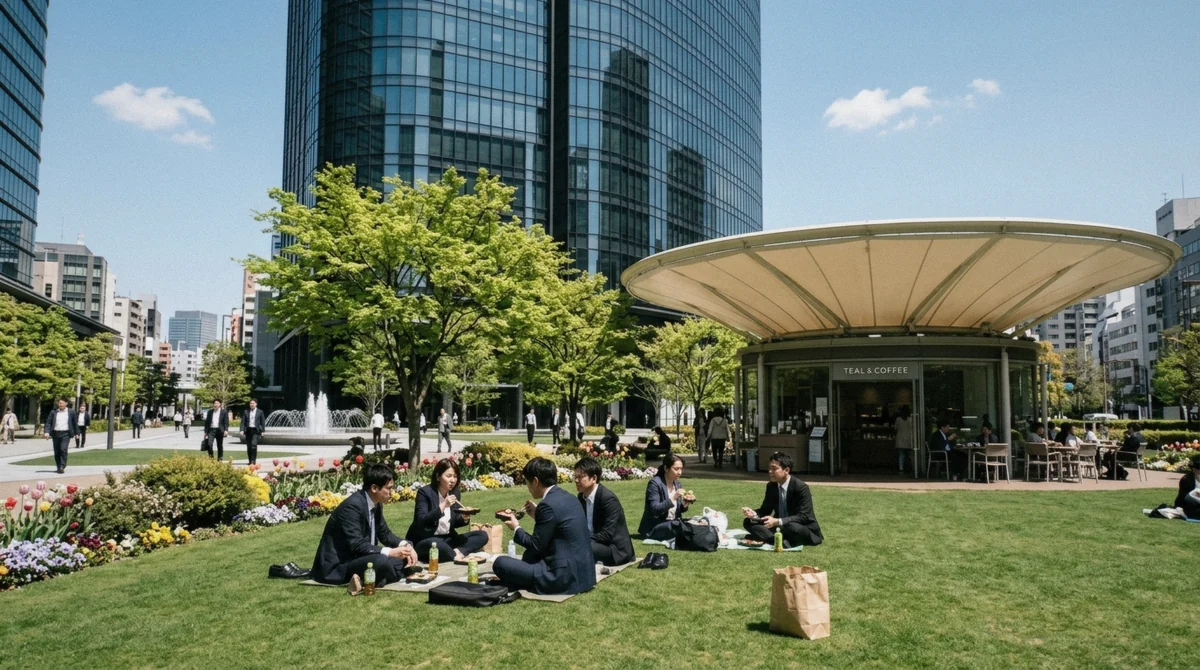
- Buy gyoza and yakitori as takeaway, then walk to the market's public tables to eat, which exist specifically for this
- For a longer sit-down, carry your haul out to Central Green, the complex's 6,000 square metre lawn, and picnic there instead
- Time the Torishiki queue: arrive by 11:15 for the 11:30 sales start if the skewers are the priority
A Central Green picnic works best with food that survives a short walk without going cold or falling apart: yakitori skewers, gyoza in its own container, and anything from Obusedo's seasonal okowa counter travel well. Wagyu from Hiyama is a different kind of purchase, usually meant for cooking at home rather than eating on the spot, so treat it as a souvenir rather than a lunch item unless you have access to a grill. If a full day at Azabudai Hills is still an open question rather than a settled plan, our honest breakdown of whether a day here is worth it weighs the food against the rest of the complex.
🎯 Our recommendation: buy the Torishiki skewers first, before anything else, since that counter is the one place in the market where timing genuinely matters. Everything else can be picked up in whatever order suits the rest of your walk, but arriving after the 11:30 sales start without having queued means a longer wait than the skewers are worth to most visitors on a tight schedule.
Weekday visits are noticeably calmer than weekends, particularly around the Torishiki counter, where the queue that forms at 11:30 on a Saturday can run considerably longer than the same queue on a Tuesday. Nothing about the market requires a reservation or advance booking; every counter operates on a first-come basis, which is part of what keeps it feeling like a working market rather than a curated tourist stop.
The Rest of the Complex's Food, and What It Costs
The market is the affordable end of eating at Azabudai Hills. Walk a few floors up or across the plaza and the prices climb steeply, which is worth knowing before you plan a full day around the complex.
| Where | What | Typical price |
|---|---|---|
| Azabudai Hills Market | Gyoza, yakitori, wagyu, okowa | ¥391-¥2,000 per item |
| % Arabica | Coffee | ¥600-¥900 |
| Yoroniku, Tower Plaza 3F | Wagyu course, closed Mondays | about ¥14,900 |
| Florilege | Tasting menu, two Michelin stars | from ¥20,000 |
That range is the honest picture: a full skewer-and-gyoza lunch at the market can come in under ¥2,000 a person, while a Florilege tasting menu at the top end runs ten times that for a single course of dining. Walking the market, the plazas and Central Green itself costs nothing at all. The only admission fees in the wider complex belong to teamLab Borderless and the Sky Room on the 33rd floor.
Think of the price ladder as three separate decisions rather than one. A market lunch answers the question of what to eat while exploring; % Arabica answers the question of where to get a coffee between stops; and Yoroniku or Florilege answer a completely different question, an evening reservation built around one meal rather than a stop on a longer day. Very few visitors need all three tiers in a single trip, and knowing which tier you actually want before arriving saves the surprise of a wagyu course priced for a special occasion when a skewer from the market would have done the job just as well.
Yoroniku, on the third floor of Tower Plaza, is closed on Mondays, which is worth checking before building an evening around it. Florilege holds two Michelin stars and operates as a tasting-menu restaurant rather than anywhere you can walk in for a quick bite, so it belongs on a different kind of trip planning entirely from a market lunch, booked well ahead as its own occasion rather than folded into a day of exploring the complex.
Frequently Asked Questions
What is Azabudai Hills Market?
A basement food market in Garden Plaza C, 34 specialist food shops across about 4,000 square metres, opened in spring 2024. Most of the tenants are wholesalers who previously sold only to restaurants and now sell directly to the public.
Is Azabudai Hills expensive?
It depends where you eat. The market itself is affordable, ¥391 to ¥2,000 per item, which is closer to a casual Tokyo lunch than a tourist-attraction price. Elsewhere in the complex, prices rise fast: coffee from ¥600, a wagyu course around ¥14,900, and a Florilege tasting menu from ¥20,000, so it is entirely possible to spend a modest amount at the market and a considerable amount two floors away on the same afternoon.
What should you buy at Azabudai Hills Market?
Kameido Gyoza's six-piece order at ¥495, and a Torishiki yakitori skewer, chicken thigh at ¥591 is the classic order, though the sales start at 11:30 and a queue forms fast. In autumn, Obusedo's chestnut okowa is worth seeking out.
What are the opening hours at Azabudai Hills Market?
Hours vary by stall. Kameido Gyoza offers takeaway from 10:00 and dine-in 11:00 to 20:00 with last orders at 19:30. Torishiki's counter runs 10:00 to 20:00, but skewer sales do not begin until 11:30.
Can you eat at the market, or is it takeaway only?
Both. Public tables exist in the market for eating what you buy on the spot, and Kameido Gyoza has a small five-seat dine-in counter. Many visitors take their food out to Central Green instead and picnic on the lawn.
Is Azabudai Hills Market worth visiting?
Yes, particularly for anyone interested in food rather than just architecture. The tenants are working wholesalers, some with a century of restaurant supply behind them, selling retail for the first time, which is a different premise from a typical tourist food hall.
How do you get to Azabudai Hills Market?
The market sits in Garden Plaza C, two minutes on foot from Kamiyacho Station Exit 5 on the Hibiya Line, the same exit used for teamLab Borderless, or four minutes from Roppongi-Itchome Station Exit 4.
Do you need a reservation for Azabudai Hills Market?
No. Every counter, including Kameido Gyoza's five-seat dine-in area, operates on a first-come basis. The only thing worth timing in advance is the Torishiki yakitori queue, which forms before sales start at 11:30.
How long should you spend at Azabudai Hills Market?
An hour is a reasonable minimum if the market is the main stop, more if the Torishiki queue is part of the plan. As a bookend to a teamLab Borderless visit, thirty to forty minutes before or after the museum covers a proper snack without slowing down the rest of the day.