 Azabudai Hills Tokyo
teamLab Borderless vs Planets: Which One to Pick
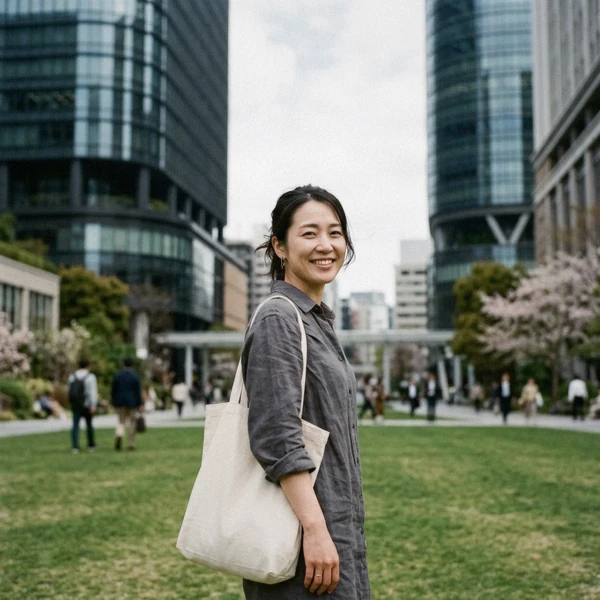
teamLab Borderless vs Planets is the question almost every Tokyo itinerary runs into, and the honest answer is that the two share a name, a ticketing system and roughly the same price, and almost nothing else about the visit itself. Borderless sits in Azabudai Hills and hands you a building with no map, where the art drifts between rooms on its own schedule. Planets sits in Toyosu and takes your shoes at the door, then walks you barefoot through water, mist and mirrors on one fixed path. Neither is a smaller version of the other. Below is the honest comparison: what each one actually costs, what the visit feels like room to room, and which to book first if you only have one afternoon in Tokyo. For the full ticket mechanics, hours and closure dates at the Azabudai Hills venue, our Azabudai Hills complex guide covers the whole site.
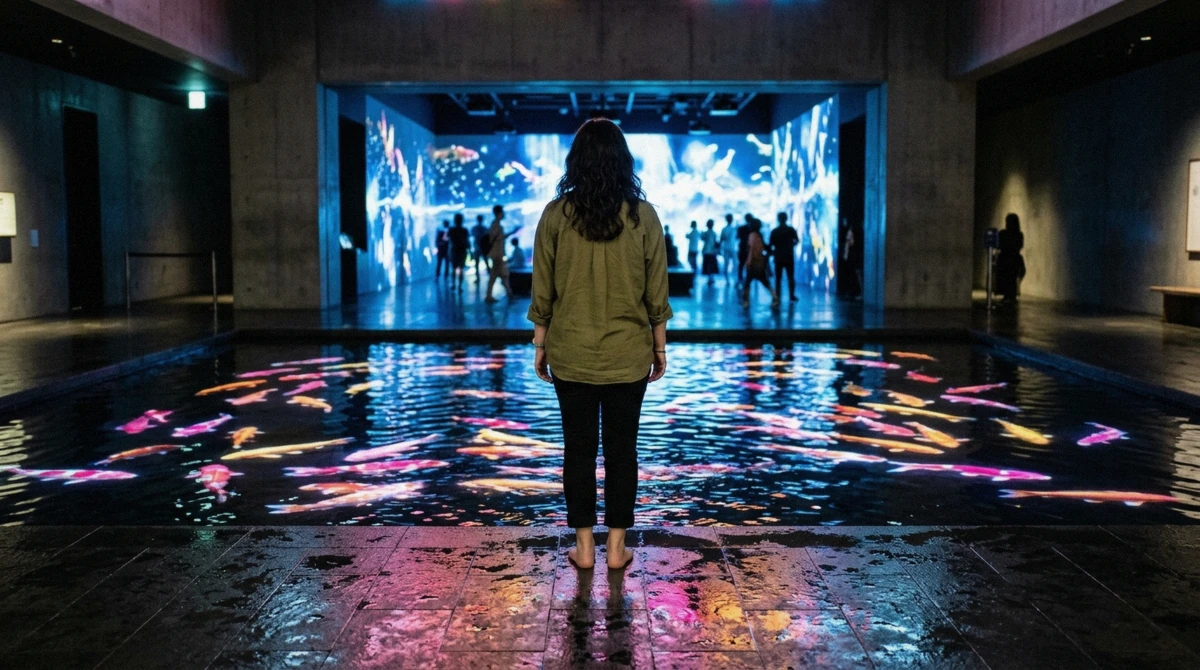
Quick answer
Neither museum beats the other outright. Borderless rewards people who like to wander and think, Planets rewards people who want to get wet and follow a fixed route. Price is nearly identical at both, so it should not decide anything. The one fact that should move your booking: teamLab Planets is scheduled to close at the end of 2027, while Borderless is permanent, so Planets is the one to prioritise if you are choosing between a Tokyo trip this year or a return trip later.
Key takeaways
- Adults start from ¥3,600 at both venues, with the same ¥1,500 and ¥2,800 child and teen bands, so price is not the decider
- Borderless has no fixed route or map; Planets follows one path and takes you barefoot through knee-deep water
- Planets closes at the end of 2027; Borderless is a permanent installation
- Planets drew 2.51 million visitors in 2025 against 1.69 million at Borderless, so its slots fill first
- A guided walk that includes Borderless admission and a fixed slot starts at $119.02 for three hours
- You can do both in one day; the transfer from Kamiyacho to Shin-Toyosu runs about 30 minutes each way
Borderless vs Planets, Point by Point
teamLab Borderless
- No map and no set order: rooms migrate into and out of each other, so no two visits follow the same path
- Mirrored floors in several rooms, wrap-around skirts on loan at the entrance, shoes stay on
- Bubble Universe, Infinite Crystal World and the Universe of Water Particles waterfall carried over from the original Odaiba museum
- Only food option is EN TEA HOUSE, where a digital flower blooms in your tea bowl, plus vending machines
- Two minutes on foot from Kamiyacho Station, inside Azabudai Hills, so it pairs naturally with the market and the Sky Room
- Permanent installation with no announced closing date
teamLab Planets
- One fixed route through Athletics Forest, Future Park and a garden area, no branching and no backtracking
- Barefoot: shoes go into a locker at the door, water reaches knee height on adults, free rental shorts run XS to 6L
- Vegan Ramen UZU sits inside the venue itself, the only teamLab site with a sit-down restaurant on the premises
- One minute from Shin-Toyosu Station, about ten minutes further out from central Tokyo than Borderless
- Higher annual attendance, 2.51 million visitors in 2025, so peak-season slots sell out sooner
- Scheduled to close at the end of 2027, a fixed term rather than a permanent run
Verdict If you can only book one, book Planets first and book it soon, purely because it has an end date and Borderless does not. If neither closing date matters to your trip, choose by temperament: Borderless suits someone who likes to wander without instructions and would rather keep their shoes on, Planets suits someone who wants a single clear path and doesn't mind getting genuinely wet up to the knee. Families with small children usually do better at Planets, where the route is short and impossible to get lost in; photographers usually prefer Borderless, where mirrored rooms and no time pressure make repeat passes through a favourite room easy.
What Actually Separates Them
Route: wander versus walk
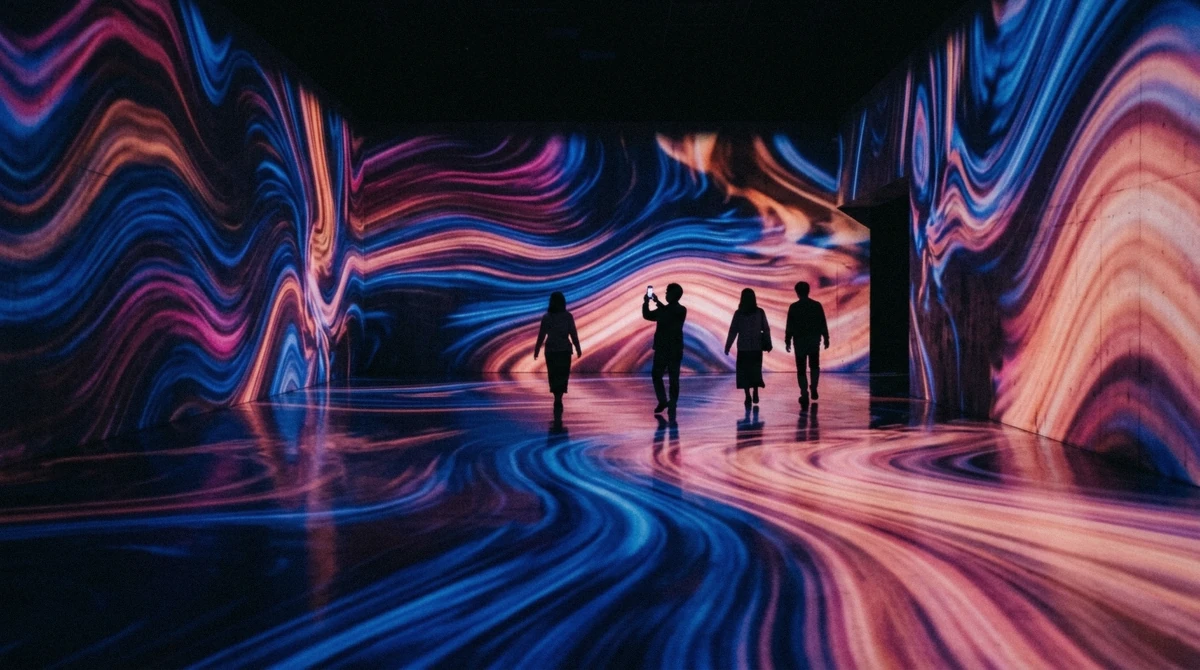
This is the single biggest difference and the one first-time visitors underestimate. At Borderless there is no map by design: works move between rooms during the day and the building rewards getting lost. Some visitors find that freeing, some find it stressful, and there is no way to know which you are until you are inside. At Planets you cannot get lost even if you try. One fixed path carries you from Athletics Forest through Future Park to the garden, room after room in a set order, no decisions required.
The practical effect shows up in how each visit feels to plan. A Borderless visit rewards arriving without a checklist, since there is nothing to check off against; a Planets visit rewards arriving with realistic expectations about the order, since the sequence itself is the experience rather than a means to reach a favourite room faster. Neither approach is wrong, but a visitor expecting one and getting the other tends to leave less satisfied than one who knew which kind of museum they were walking into.
Water and bare feet
Planets is a barefoot museum. Shoes go into a locker at the entrance, water in some rooms reaches knee height on an adult, and the museum lends free rental shorts in sizes XS to 6L for anyone who would rather not wade in trousers. Borderless keeps you dry and shod throughout; the only place bare skin comes into it is the mirrored floors, where staff hand out wrap-around skirts so dresses and skirts do not become a problem underfoot.
Neither venue photographs badly. Both allow photography and video without flash and without any support over 30 cm, which rules out tripods, monopods and selfie sticks at both venues equally, and both ban re-entry once you leave for the day, so plan for one continuous visit rather than a break outside. Our photo spots guide covers Borderless room by room if that is the deciding factor for you.
| teamLab Borderless | teamLab Planets | |
|---|---|---|
| Adult price | ¥3,600 to ¥5,600 | from ¥3,600, dynamic |
| Hours | 8:30 to 21:00 | 8:00 to 22:00 |
| Premium pass | Flexible Pass, ¥12,000 | Premium Pass, ¥12,000 |
| Nearest station | Kamiyacho, 2 minutes | Shin-Toyosu, 1 minute |
| 2025 visitors | 1.69 million | 2.51 million |
| Term | permanent | to end of 2027 |
| 2026 closures | 25 August, 8 September, 20 October | 5 August, 3 September, 1 October |
Both venues price children 4 to 12 at ¥1,500 and teens 13 to 17 at ¥2,800, and both sell a ¥12,000 all-day pass with no fixed entry time, so a family of four pays almost the same total either way. The one line item that differs materially is food: Planets has Vegan Ramen UZU inside the building, Borderless has only EN TEA HOUSE and vending machines, so a Borderless day usually means eating at the Azabudai Hills Market before or after.
Which One Suits Your Kind of Trip
Beyond the specific situations below, it helps to think about the kind of traveller you are on this particular trip, not just the day's circumstances.
| Traveller | Pick | Why |
|---|---|---|
| First-time Tokyo visitor with one free day | Borderless | Sits inside Azabudai Hills, so the market and the Sky Room fill the rest of the day without another journey |
| Repeat Tokyo visitor who saw Borderless before | Planets | The barefoot, fixed-route format is different enough to feel new, and it closes at the end of 2027 |
| Couple wanting a slower, talk-as-you-go visit | Borderless | No route means no pressure to keep moving; a favourite room can be revisited at will |
| Group with mixed ages and mobility | Planets | One fixed path means nobody in the group can wander off or get separated |
| Traveller building a tight day around one big activity | Planets | Fixed route and fixed rhythm make the visit length predictable in a way Borderless is not |
| Traveller who wants the widest range of rooms to explore | Borderless | More named rooms in rotation, including Bubble Universe, Infinite Crystal World and EN TEA HOUSE |
Which One Should You Book
If You are travelling with toddlers
Planets. The fixed route means nobody gets lost, though the knee-deep water in some rooms is worth checking against a very young child's height and confidence first.
If You have one afternoon in Tokyo and no second trip planned
Borderless, for the location alone. It sits inside Azabudai Hills, so the market, the Sky Room and the walk itself fill the rest of the afternoon without another train ride.
If Photography is the main reason you are going
Borderless. Dry rooms, no time pressure on repeat passes, and mirrored floors that reward patience over a fixed route.
If It is raining and you want to stay dry
Borderless. Planets by definition gets your feet and lower legs wet regardless of the weather outside.
If You are already in Roppongi or Toranomon
Borderless. Planets is a further trip out to Toyosu and worth planning as its own outing rather than an add-on.
If You use a wheelchair
Both venues admit wheelchairs, but some works are unreachable at each one. Check the current accessibility notes on the official ticket page for the venue you are choosing before booking.
Doing Both in One Day
Both museums are workable in a single day if you start early and accept that it will be a full day rather than a relaxed one. Book the first entry slot at Borderless, 8:30, and plan roughly two hours inside. From Kamiyacho or Roppongi-Itchome, the ride out to Shin-Toyosu on the Yurikamome takes about 30 minutes with one change, so a late-morning departure lands you at Planets in time for an early afternoon slot.
Reverse the order if a Planets morning slot suits your hotel location better; the transfer time is the same either direction.
- 8:30 Borderless opens, two hours inside before the rooms get busy
- 10:30-11:00 leave Kamiyacho for Shin-Toyosu, about 30 minutes door to door
- 12:00-14:00 Planets, barefoot, lunch at Vegan Ramen UZU inside the venue
- Return transfer back into central Tokyo, about 30 minutes
Budget two full-price adult tickets, roughly ¥7,200 to ¥11,200 combined depending on the day and slot, plus train fares for the Kamiyacho to Shin-Toyosu leg. A private guided route that bundles the Borderless portion with the wider Azabudai Hills complex, such as the four-hour art and architecture tour, is worth considering if you would rather not manage two separate timed tickets and a transfer on your own.
🎯 Our recommendation: if you can only manage one museum on this trip, let the closing date decide it. Book Planets first, since it is scheduled to close at the end of 2027 and Borderless is not going anywhere. Save Borderless for a return trip to Tokyo, when it will still be exactly as unmapped and unhurried as it is today.
Booking Windows and Crowds
Both museums sell tickets with a fixed entry time attached, cost more if bought at the door on the day, and open sales roughly two months ahead of the visit date. That gap matters more at Planets than at Borderless, because Planets pulled in 2.51 million visitors in 2025 against 1.69 million at Borderless, so its popular slots, particularly weekend mornings and the last hour before closing, sell out further in advance. If a specific date matters more than a specific time of day, book Planets first and let the Borderless slot follow, since Borderless tends to have more flexibility left closer to the visit.
Both venues let you change the date on an official ticket up to three times, provided you do it at least two hours before the original slot, which is useful insurance against a delayed flight or a change of plan mid-trip. Neither ticket is refundable outright, so treat the purchase as committed to a visit rather than to an exact date once bought. If your itinerary is still loose, the flexible pass at either venue is worth the premium over a standard ticket precisely because it removes that pressure entirely, letting you decide which day suits the visit once you are actually in Tokyo rather than weeks in advance.
Frequently Asked Questions
Which is better, teamLab Borderless or Planets?
Neither is objectively better. Borderless suits open-ended wandering with no route and dry feet; Planets suits a fixed barefoot path through water. Choose by temperament and by the fact that Planets closes at the end of 2027 while Borderless does not.
Is Borderless or Planets bigger?
Both draw large annual crowds, with Planets ahead at 2.51 million visitors in 2025 against 1.69 million at Borderless. Neither museum publishes a comparable floor area, and the experiences are structured too differently, one route-free and one fixed, to compare by size alone.
Which teamLab is the best?
There is no single best; the two museums are built around opposite ideas of a visit. If forced to choose one to prioritise, book Planets sooner because it has a scheduled end date of 2027, while Borderless has none.
Can you do both teamLab museums in one day?
Yes. Start at Borderless for the 8:30 opening, then transfer to Shin-Toyosu, about 30 minutes from Kamiyacho, for an early afternoon Planets slot. It makes for a full day rather than a relaxed one.
Which teamLab is better for kids?
Planets generally works better for young children because the route is fixed and short, so nobody gets separated or lost. Families should check that knee-deep water in some rooms suits a very young child before booking.
Do Borderless and Planets cost the same?
Close to it. Both price adults from ¥3,600 with dynamic pricing by date and slot, children 4 to 12 at ¥1,500, and teens 13 to 17 at ¥2,800. Both also sell a ¥12,000 all-day pass with no fixed entry time.
Is teamLab Planets closing?
Yes, it is scheduled to run only until the end of 2027. teamLab Borderless in Azabudai Hills has no announced closing date and is treated as a permanent installation.